
Trace Laurel County Former Owners From the Latest Deed
The clerk's recorded chain is the place to start. eCCLIX lets registered users reach available land records online, and anyone without an account can use the deed room instead. The clerk publishes no exact starting year for the online records, so a missing online result never proves a missing deed. Work backward through the chain and let the indexes guide each step.
| Source | Years It Covers | Where Held | What It Shows |
|---|---|---|---|
| eCCLIX land records | Exact start not published | Online for registered users | Indexed instruments and available images |
| Deed books and indexes | County-era run varies by book | County Clerk and KDLA microfilm | Grantor, grantee, description, and reference |
| Recorded plats | Varies by subdivision | County Clerk | Lots, roads, dimensions, and easements |
| Laurel tax lists | Selected years, 1827 to 1875 | KDLA | Taxpayer, acreage, and value clues |
Anchor the search to a current parcel, not an old surname. PVA sale information often lists the deed book and page, grantor, grantee, date, and price. Those fields lead straight into the clerk's chain. The deed's legal description is your safeguard against chasing a same-name person. It also protects you from a different tract.
Build a Laurel County Former-Owner Timeline
Build the timeline one row at a time. Every row should rest on an actual deed rather than a name pulled from a tax list alone, so the pattern emerges from real transfers instead of guesswork.
| Transfer date | Grantor to grantee | Deed type | Book and page |
|---|---|---|---|
| Newest transfer | Prior holder to current grantee | As stated | Exact reference |
| Prior acquisition | Earlier grantor to prior holder | As stated | Index or deed reference |
| Earlier link | Repeat with description | Warranty, quitclaim, fiduciary, or other form | Preserve volume and page |
Treat each seller as the next buyer to hunt. That habit keeps former-owner research tied to recorded transfers instead of a loose pile of names.
Find Laurel County Former Owners by Book and Page
A book-and-page reference beats a common surname as a historic key. Search both name indexes and try initials, spouses, trustees, and spelling variants. But check the legal description each time you land on a hit. Modern parcel numbers rarely appear in old deeds. A split can hand the same land a fresh number while the older description calls survive. The Laurel County Clerk records page explains eCCLIX and deed-room access for getting started.
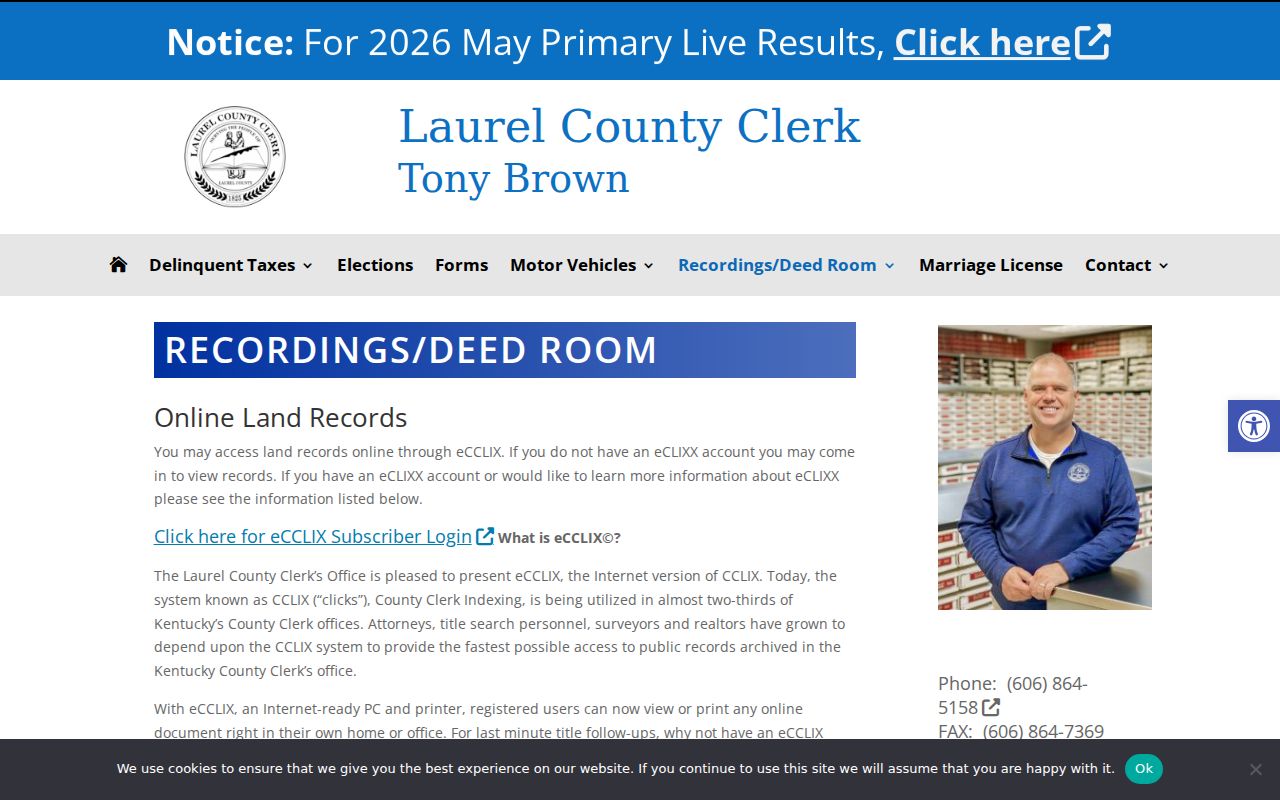
The clerk's records page is the reliable starting point. Any question about an early year belongs with the clerk or KDLA, never with an assumed cutoff.
Walk the Laurel County Former-Owner Chain Backward
Handle one transfer at a time. For each step, save the source, instrument type, recording reference, indexed names, and the description that pins down the tract.
- Find the newest acquisition deed for the current grantee and verify its legal description.
- Read the grantor and any prior-deed reference in that instrument.
- Search that grantor as a grantee in the earlier index and locate the acquisition deed.
- Repeat through both indexes, logging every book-and-page link.
- When online images stop, request the deed book, index, or microfilm.
- Grantor
- The party conveying the stated interest.
- Grantee
- The party receiving the stated interest.
- Chain of title
- The ordered sequence of instruments affecting the same land.
- Reverse index
- An index used to locate a party on the opposite side of a transfer.
- Quitclaim and warranty deed
- Different deed forms whose exact effect must be read from the instrument.
Bridge Laurel County Former Owners With Plats
A recorded plat can link a modern address to the lot and block used in older deeds. It is a useful bridge. Local anchors worth searching include Forest Hills lots 1 through 11, Stable Creek, North Hills lots 24 and 25, Lilly Robinson roadway material, and Saddlebrook near SR 192 and Boggs Road. Look for the subdivision name in plats, deed descriptions, PVA legal text, and city ordinances. Rural deeds often skip plats entirely. Metes and bounds, acreage, roads, creeks, monuments, surveys, and prior deed calls do the work instead. Surveys and monuments carry the description. A tax map orients you to the tract. It never replaces the recorded description.
Search Old Streets for Laurel County Previous Owners
London Ordinance 2018-05 renamed Amarillo Drive as Shiloh Drive. That single record explains why previous owners can vanish from a current address search. Record the address exactly as each source gives it. Then try both street names in PVA material, deeds, newspapers, and city files. Route abbreviations and rural descriptions deserve the same care. A failed address search may mean a changed label, not a broken ownership chain.
Follow Laurel County Prior Owners Through Estates
Not every transfer is an ordinary sale. A chain may run through a fiduciary deed, affidavit of descent, commissioner's deed, sheriff's deed, or another special instrument, and the Laurel clerk records affidavits, wills, liens, judgments, lis pendens, releases, and tax-related filings as well. Read the instrument and the linked probate or court file before concluding why title moved. Remember that a mortgage or assignment is only an encumbrance. An obituary or tax list is a lead, never proof of ownership.
Use Tax Lists for Laurel County Former Owners
The Kentucky Department for Libraries and Archives holds selected Laurel tax lists. The lists cover 1827 through 1875. They can place a taxpayer, an acreage, and a value in a given year. No modern address or parcel number is required. Use them with care. The taxpayer was not always the sole titleholder, and one entry may cover several tracts. Pair tax evidence with deeds and legal descriptions. The Kentucky Land Office adds patent material, though a patent proves nothing about today's owner.
Audit Laurel County Former Owners for False Matches
Compare more than a surname before accepting any former owner. Check the spouse or co-grantee. Check the recording sequence and the acreage. Look at the subdivision and lot, the road or creek calls, and the prior instrument the deed cites. One person may have held several tracts. Two strangers can share initials. A tax mailing address can separate them, but it marks where mail went rather than where the land sits. Leave doubtful links marked as doubtful. An index entry only points the way. The image itself shows the interest conveyed and any exceptions stated. A quitclaim passes only what the grantor actually had. A fiduciary instrument may hinge on a court appointment. What makes a chain sound is matching land descriptions joined by connected instruments, not a tidy list of names.
Carry Laurel County Previous Owners Before 1826
Laurel County dates to 1826. It was carved from territory tied to Clay, Knox, Rockcastle, and Whitley counties. So older land sat in a parent county first. Once a deed chain in Laurel County property records reaches that starting year, move to the parent county's conveyance and tax records. Add patent material when the parcel description calls for it. An empty Laurel index does not mean the land had no earlier owner of record.
Coverage limit. Laurel's exact eCCLIX start year is not published; older owners may require deed books, KDLA microfilm, tax lists, and parent-county records.
No courthouse fire or wholesale loss of Laurel land books is documented in any official source. Rather than repeat an unsupported loss story, ask the clerk about gaps at the book level.
Lawful use. Research Laurel County former owners for house history and property diligence, never to track, harass, or intimidate a living person.