
Inside Laurel County Property Tax Records
Laurel County property tax records start with the Property Valuation Administrator, the PVA. That office estimates fair cash value and maintains the parcel facts behind the tax roll. Real-property taxes go to the Laurel County Sheriff. Delinquent-tax sale records sit with the county clerk. So a parcel card is never a receipt. A bill alone is not the whole assessment file either.
| Field | What It Shows | Where |
|---|---|---|
| Assessed value | Value placed on the tax roll | Laurel County PVA |
| Sale and parcel facts | Recorded sale clues, land and improvements | PVA parcel card |
| Exemptions | Approved relief affecting taxable value | Laurel County PVA |
| Tax bill & status | Current charge and collection status | Laurel County Sheriff |
| Delinquent certificate | A dated stage in tax collection | Laurel County Clerk |
The PVA values property but sets no rates and collects nothing. Taxing authorities set the rates. Collection falls to the sheriff, as the Kentucky Department of Revenue describes. A tax change can trace to value, rate, district, exemption, or several of those at once.
Read Laurel County Property Tax Values on the Parcel Card
The Laurel County PVA offers searches by owner name, address, and parcel number through qPublic. One result can tie together the situs address and owner mailing address. It also pulls in the assessment, exemption, sale data, building traits, photo, and sketch. Laurel's data pages display an upload date. They link assessment figures to the last certified tax roll. Those labels hint at freshness. They do not promise that every recent deed has reached the roll.
| Search key | Best use | Check before relying |
|---|---|---|
| Street address | Begin with a known site | Try normalized road wording |
| Owner name | Find parcels under one roll name | Try initials and joint names |
| Parcel number | Match land across tax files | Keep punctuation and suffixes |
A mailing address receives the notices. The situs is where the land actually lies. Confusing the two can push a Laurel County tax search toward the wrong property, especially when a London mailing label covers land beyond the city limits.
Note: A qPublic upload date applies to the displayed dataset and does not guarantee that every ownership change has posted.
Exemptions in Laurel County Property Tax Records
Laurel County offers meaningful relief through its homestead exemption. The PVA's homestead exemption guidance covers owners who are 65 or older, or totally disabled, and who live on the parcel as a primary residence on January 1. The published exemption amount is $49,100 for 2025 and 2026. Age or disability alone does not shift relief onto a property record. Eligibility and supporting papers decide the outcome.
Apply through PVA forms, and confirm which proof fits your situation before filing. The PVA also publishes a mailing-address change form. Updating correspondence does not change a parcel's situs or legal description. It simply keeps assessment and tax notices reaching the owner of record.
How Laurel County Builds an Assessment
The PVA uses three value approaches: sales comparison, cost, and income. Residential appraisals lean on comparable sales and property traits. Cost work weighs replacement cost against depreciation. Income analysis fits income-producing commercial property. Each method supports an assessment. Yet none promises what one buyer will actually pay.
Laurel real property follows a four-year physical review cycle under the PVA's published duties. Reviews can draw on exterior inspection, deeds, permits, maps, and other data. The cycle does not hand every parcel a new sale-based figure once every four years. It describes inspection work that supports the continuing roll.
Why Laurel County Property Tax Bills Differ by District
County, school, city, and special-district rates can all apply depending on where the parcel sits. The PVA identifies and values it. Each authority's rate feeds the final charge. That split explains why two similarly valued parcels can carry different bills. A London postal address alone never proves the city rate belongs on the land.
Pair mapped jurisdiction evidence with the tax record when a district looks wrong. Kentucky GeoNet supplies state GIS context. London's annexation records document city boundary changes. Neither replaces the official roll. But either can explain why a mailing label and taxing jurisdiction seem to disagree.
Look Up a Laurel County Property Tax Bill
The Laurel County Sheriff's property-tax page is the route for bill information. Start with the PVA parcel whenever the address is unclear. Then carry the parcel number and exact owner spelling into the sheriff portal. Watch the tax year. A paid prior year says nothing about a later bill's status.
- Find the parcel card by situs address, owner, or parcel number.
- Record the parcel key, value, exemption, and district information.
- Open the sheriff link and match the parcel, owner, and tax year.
- Save the status or contact the sheriff if the portal cannot resolve it.
- Assessed value
- The PVA value carried to the roll.
- Fair cash value
- The Kentucky assessment standard described by the PVA.
- Tax rate
- A rate set by taxing authorities, not the PVA.
- Tax lien
- A legal claim linked to unpaid property tax.
The sheriff lists payment methods on its site. It also staffs an office at 203 South Broad Street, Suite 1, London. If online lookup fails, call 606-864-6600 or visit the office. That channel also helps with renamed roads or split parcels.
The official sheriff property-tax page shows the local entry point for the bill search.
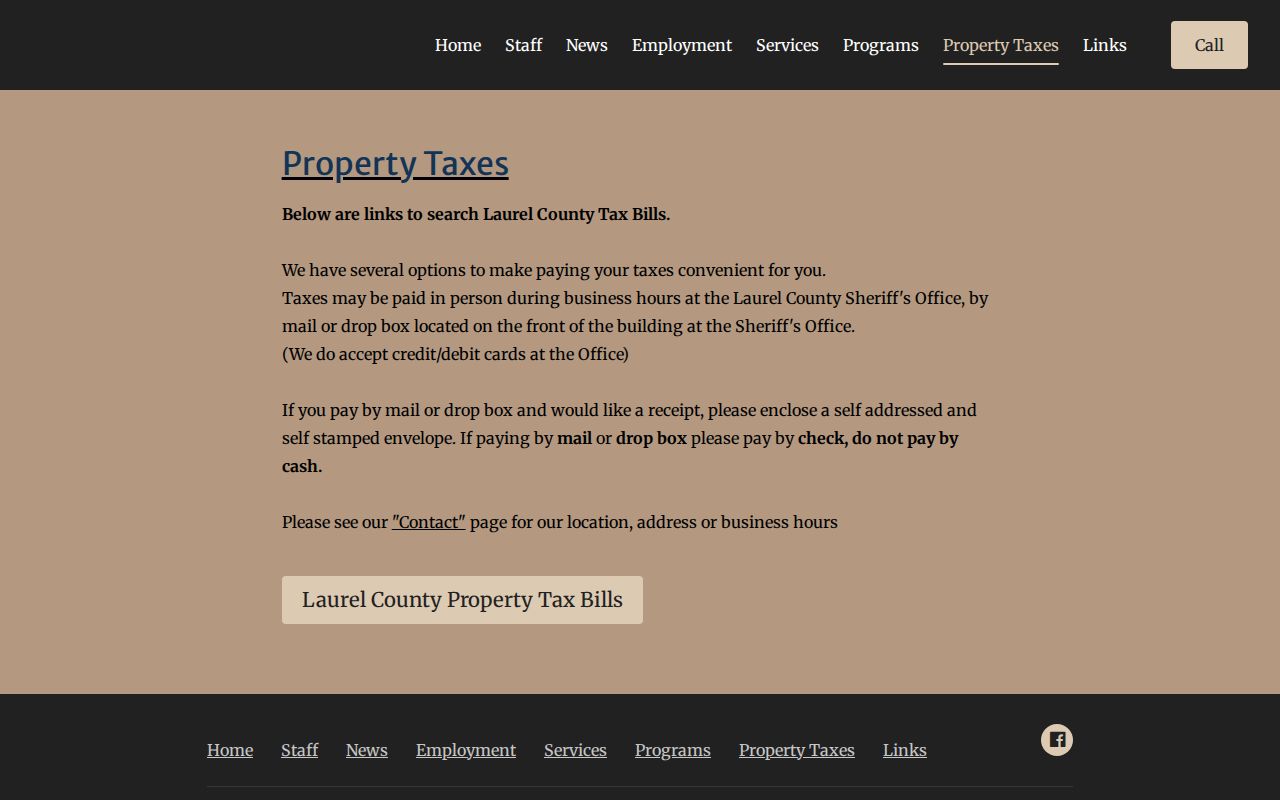
That page steers both bill searches and payment questions. Check its result against the PVA assessment details for the same parcel and year.
The 2026 Laurel County Delinquent-Tax Snapshot
The Laurel County Clerk tax-sale page has outlined a 2026 lottery and registration process. It serves third-party purchasers. Materials list dated lists, deadlines, sale papers, and a 25 percent deposit. The clerk warns that payoff figures shift. Interest and fees accrue, or an owner pays.
Treat any list as a snapshot. Save its date, bill number, map number, owner shown, and status checked. Then confirm the live balance. Appearance on an older list does not prove the bill stayed available at sale. It also does not prove the bill remains unpaid now.
Note: A tax-sale entry documents one collection stage and does not establish a new owner before all required legal steps occur.
The clerk's current tax-sale page is the dated official source shown here.
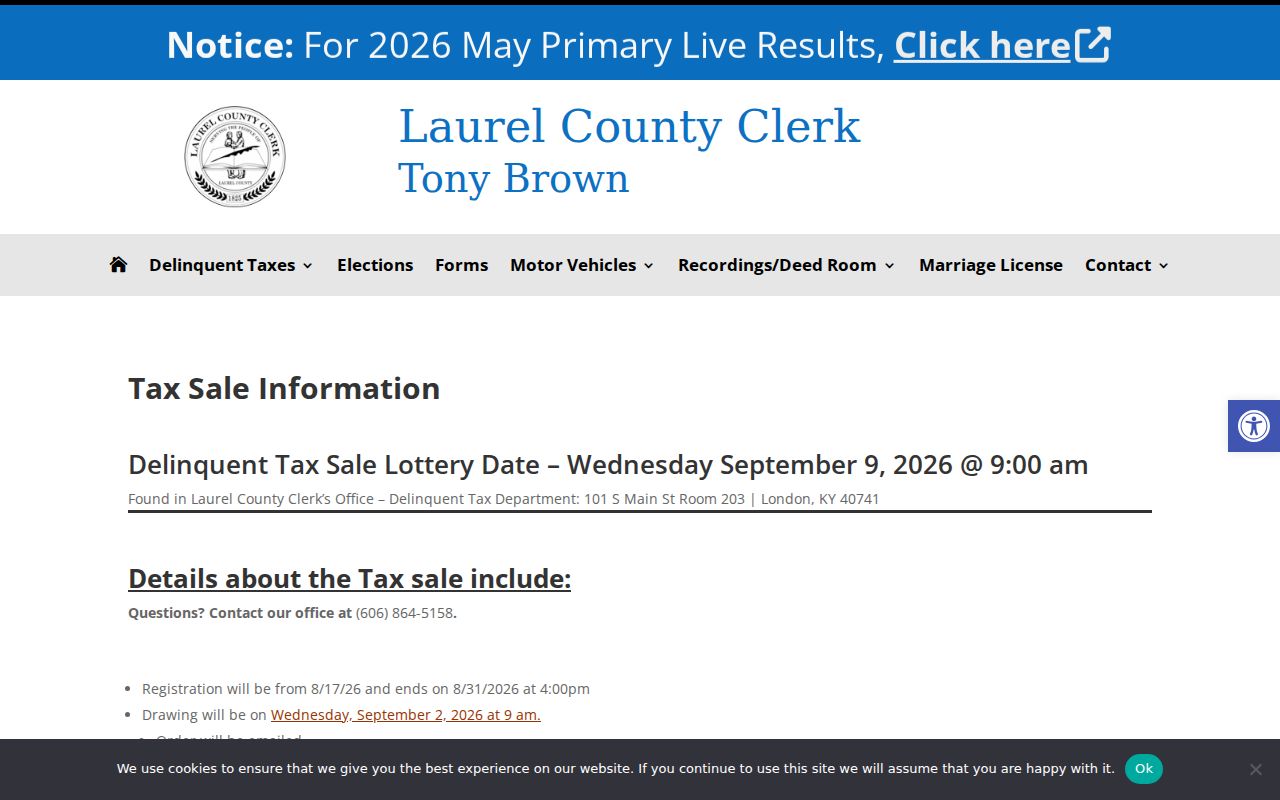
Payoff amounts and participation rules change often. Rely on the live delinquent-tax page for any current balance, never on a saved image of it.
Contest a Laurel County Property Assessment
Take the dispute to the PVA first, not the sheriff. The local appeals instructions tell owners what to bring. Useful evidence includes recent comparable sales, photographs, or an appraisal. Facts showing a plain error in the property records also help. The conference may settle nothing. If so, the owner can file through the Laurel County Clerk for the local board.
2026 appeal timing. The inspection period was May 4 through May 18, 2026, and a local-board appeal had to be filed by the next workday. Verify each year's dates.
Remember that an appeal attacks the assessment, not the tax rate. Check acreage, classification, improvement facts, and sale data in the property records before filing. Keep dated evidence and the conference result, since the state sets the broader sequence while Laurel offices handle local filing.
Limits of Laurel County Property Tax Records
Property tax records show how the government identifies, values, and bills a parcel. They are not a survey, appraisal, deed, or title opinion. A roll owner can lag behind a transfer. Assessed value can differ from sale price. A map line can stray from the legal description. When ownership matters, compare the PVA card with the sheriff's tax bill. Lean on the newest recorded deed. For more on the figures, see the Laurel County property value guide. Keep each question with its custodian. Assessment and exemption issues go to the PVA. Collection and payment issues go to the sheriff. Delinquent-sale materials go to the clerk.